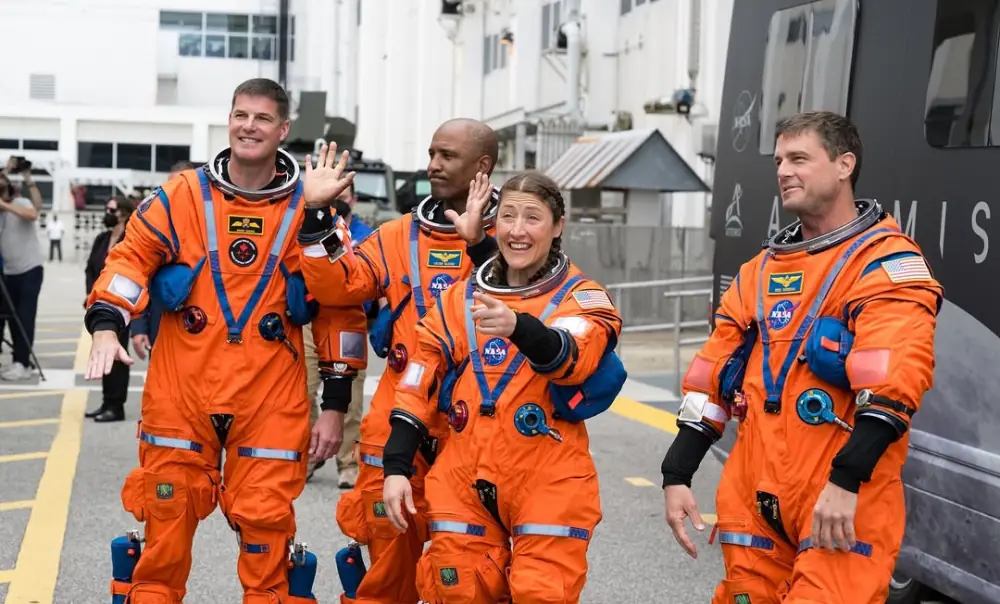
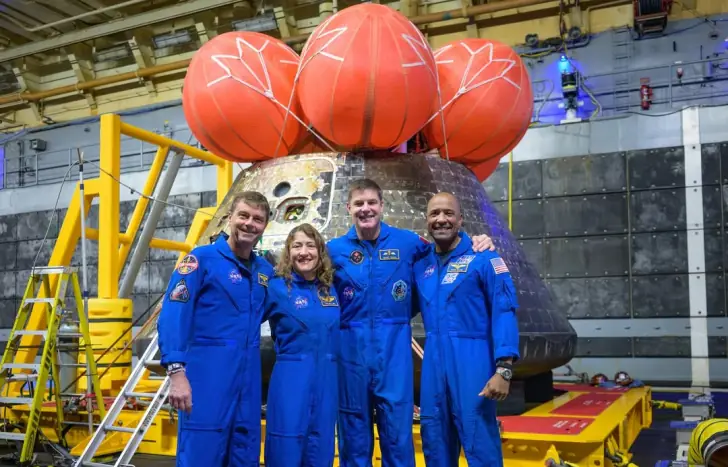
NASA’s Artemis II mission ended with a flawless splashdown in the Pacific Ocean on April 10, 2026. The Orion capsule hit the water at a controlled speed, and all four astronauts were reported healthy and in good shape. It looked smooth from the outside, but the risks behind that moment were very real.
This mission pushed humans farther into space than they have traveled in decades. That distance brought a different set of dangers compared to missions in low Earth orbit. From radiation exposure to the stress of re-entry, the crew had to handle conditions that tested both their bodies and minds.
Deep-Space Radiation Was the Silent Threat
These particles can pass through spacecraft walls and even the human body.
Galactic cosmic rays were the main concern during this mission. These particles come from distant stars and carry intense energy that is hard to block. Even short exposure can affect cells, especially in sensitive areas like bone marrow and the brain.
NASA expected radiation levels to be higher than what astronauts experience on the International Space Station. The crew wore sensors and used onboard tools to track exposure in real time. This data will help scientists understand how deep-space travel impacts the human body over time.
Microgravity Took a Toll on the Body
Living without gravity may sound fun, but it comes with real physical changes. In space, fluids shift toward the head, which can increase intracranial pressure and affect vision. Some astronauts notice blurry sight or discomfort during and after missions.
Muscles also weaken quickly in microgravity. The body no longer needs to support its own weight, so important muscle groups start to shrink. Even a 10-day mission can lead to noticeable loss in strength.
Bone density is another concern. Without regular stress from gravity, bones begin to lose minerals. This process happens faster than many people expect, even during short missions like Artemis II.
NASA prepares astronauts with strict exercise routines, but that only reduces the impact. After landing, the crew still needs time to rebuild strength and adjust to normal movement again.
Re-Entry Heat and Speed Were the Final Test
That speed created intense friction, heating the outer shell to nearly 5,000 degrees Fahrenheit.
The heat shield had to perform perfectly. NASA made changes after earlier tests to ensure it could handle these extreme conditions. A failure at this stage would have been catastrophic.
During peak heating, the crew experienced a communications blackout. This is normal, but it adds stress because contact with mission control is temporarily lost. For a few minutes, the astronauts were completely on their own.
Confinement and Isolation Tested Their Minds
The Orion capsule is not spacious. NASA often compares it to a camper van, which means four astronauts shared a very tight space for nearly ten days. That level of confinement can wear on anyone.
Being far from Earth adds another layer of pressure. The crew traveled about a quarter of a million miles away, which creates a strong sense of isolation. Communication delays and limited outside contact can make that feeling stronger.
Sleep can also become a problem in space. Light cycles are different, and the body’s internal clock can get confused. Poor sleep affects mood, focus, and overall performance.
NASA studies how crews handle these conditions because future missions will last much longer. Artemis II provided valuable insight into how astronauts cope with stress, teamwork, and mental fatigue in deep space.
After splashdown, recovery teams quickly reached the capsule. The astronauts were helped out one by one and flown to a nearby ship. Even though they looked fine, medical checks started right away.