
Sleep does more than restore energy after a long day. New research suggests that the amount of sleep a person gets may also be tied to how quickly different organs age.
Both very short and very long sleep were associated with faster biological aging in the brain, heart, lungs, immune system, and other parts of the body. The same sleep patterns were also connected with several common diseases.
The study, led by Junhao Wen, assistant professor of radiology at Columbia University Vagelos College of Physicians and Surgeons, examined biological aging across multiple organ systems.
The findings were published in Nature.
How Sleep Relates to Aging
Chronological age tells how many years a person has lived. Biological age offers a different measure. It reflects how old the body's tissues and systems appear based on biological changes.
Researchers now use aging clocks to estimate this difference. These tools rely on machine learning and biological data, including proteins found in blood samples and measurements taken from medical imaging.
Many aging clocks produce one overall biological age. However, organs do not always age at the same pace. The ovaries, for example, can experience age-related changes that differ from those seen elsewhere in the body.
Wen and his colleagues developed aging clocks for individual organs to capture these differences. Their work also explores whether lifestyle factors, such as sleep, could be connected with the rate of biological aging.
“Everyone is excited by these aging clocks and their ability to predict disease and mortality risk,” Wen said. He added that an important question is whether these clocks can be linked to a lifestyle factor that people can change early enough to potentially slow aging.
Researchers Find a Sleep Sweet Spot

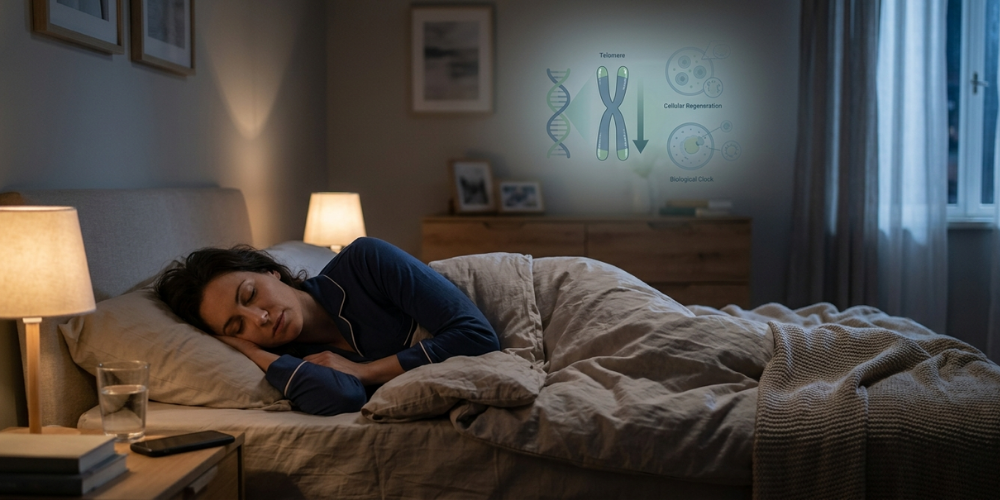
Magnific | Research links imbalanced sleep patterns to premature organ aging and an increased likelihood of chronic disease.
The study used health information from about half a million participants in the UK Biobank. Researchers applied machine learning to identify biological patterns associated with aging across different organs.
The team used several forms of biological information. These included medical imaging measurements, organ-related proteins, and molecules detected in blood.
For some organs, researchers created multiple aging clocks based on different types of data. Wen explained that the liver, for instance, had clocks based on protein data, metabolic information, and imaging. This approach allowed the researchers to examine whether sleep showed similar links across different biological measurements.
The researchers then compared participants' reported sleep duration with results from 23 aging clocks covering 17 organ systems.
The results showed a U-shaped relationship. People who slept fewer than six hours or more than eight hours generally showed signs of faster biological aging.
The lowest aging estimates appeared among those who reported sleeping roughly 6.4 to 7.8 hours per day.
That does not mean sleep duration directly causes faster aging. The study was observational, so it cannot prove cause and effect. Instead, the findings suggest that unusually short or long sleep may serve as a marker of poorer health and changes occurring throughout the body.
Short Sleep and Disease
The connection between sleep and health extended well beyond aging measurements.
Short sleep was significantly associated with depressive episodes and anxiety disorders. This supports previous research linking insufficient sleep with mental health concerns.
Researchers also found associations between shorter sleep and several physical conditions, including:
- Obesity
- Type 2 diabetes
- High blood pressure
- Ischemic heart disease
- Heart arrhythmias
Both short and long sleep were associated with chronic obstructive pulmonary disease and asthma. The patterns also appeared in digestive conditions, including gastritis and gastroesophageal reflux disease.
Wen described the broad brain-body connection as an important finding. According to him, sleep duration appears to be closely tied to overall physiology, with effects that can reach many parts of the body.
Sleep and Late-Life Depression
The researchers also examined how sleep might relate to depression later in life. The organ-specific aging clocks offered a way to look beyond a simple connection between sleep duration and depression.
Still, the study could not determine which factor came first. Depression may affect sleep, while sleep problems may also be associated with changes linked to depression.
Researchers used a statistical method called mediation analysis to examine whether biological aging could help explain the relationship between sleep duration and late-life depression.
The results pointed to different patterns for short and long sleepers.
Short sleep appeared to have a more direct relationship with the burden of late-life depression. Long sleep, meanwhile, appeared to be connected with depression through biological aging signals involving the brain and adipose tissue, which is body fat.
These findings suggest that short and long sleep may not represent the same biological process, even when they are associated with a similar health outcome.
“This has a strong implication for future sleep management and future therapeutics,” Wen said. He noted that different biological pathways may connect long and short sleep with late-life depression, meaning the two patterns should not necessarily be treated in the same way.
Why Organ-Specific Aging Matters
Freepik | Sleep is linked to widespread health issues and biological aging, serving as an indicator rather than a direct cause.
Looking at the body as one system can hide important differences between organs. A person may have aging changes in one organ that are not equally visible elsewhere.
The 23 aging clocks used in this study gave researchers a broader view of those differences. By examining 17 organ systems, the study connected sleep duration with biological aging across multiple areas rather than focusing only on the brain.
This approach may also help researchers study how lifestyle habits relate to specific diseases. Sleep could affect several systems through interconnected processes involving metabolism, immune function, and communication between the brain and the rest of the body.
However, the findings do not establish an ideal sleep duration for every individual. Sleep needs can vary with age, health, daily activity, medications, and other factors.
What the Findings Mean
The research adds to evidence that sleep duration and overall health are closely connected. Both ends of the sleep spectrum showed associations with faster biological aging, while people reporting around 6.4 to 7.8 hours had the lowest aging estimates in this analysis.
The study also highlights why sleep should not be viewed in isolation. Changes in sleep can occur alongside mental health conditions, metabolic problems, cardiovascular disease, lung disorders, and digestive issues.
Because the research does not prove that sleep duration directly causes biological aging, the findings should be viewed as an association rather than a prescription.
The Nature study found that both very short and very long sleep were associated with faster biological aging across multiple organs. People who reported about 6.4 to 7.8 hours of sleep showed the lowest aging estimates.
The findings also suggest that sleep may affect late-life depression through different biological pathways, depending on whether a person sleeps too little or too much.